NYC Subway Guide: Master Lines & Fares for First-Timers
"The subway is the heartbeat of the city, but for a first-timer, that heartbeat can feel like a chaotic drum solo."
Mastering the rails is the difference between spending your afternoon staring at a concrete wall and actually seeing the sights. In the fast-moving world of 2026, knowing how to navigate the MTA is an essential survival skill for anyone visiting the five boroughs.
* The subway is the fastest way to move through the five boroughs. * OMNY (contactless payment) has largely replaced the need for physical cards. * Understanding "Express" vs. "Local" is the secret to saving hours of travel time. * Always verify your direction (Uptown vs. Downtown) before stepping onto a platform.

Why does the map look like a plate of colorful spaghetti?
I stood at the entrance of a crowded station in Midtown during a humid July afternoon in 2026, staring at a colorful, tangled web of lines on a plastic map, feeling completely lost.
The sheer density of the lines made my head spin, but once I realized that colors represent lines and numbers/letters represent specific trains, the chaos began to make sense. In NYC, you aren't just looking for a station; you are looking for a direction.
In Manhattan, you will almost always be traveling either "Uptown" (toward higher street numbers/the Bronx) or "Downtown" (toward lower street numbers/Lower Manhattan).
If you head the wrong way, you might end up in Brooklyn when you meant to be at the Metropolitan Museum of Art. The biggest trap for newcomers is the distinction between Express and Local service.
Local trains stop at every single station along a line, which is great for reaching a specific corner but slow for long distances. Express trains skip smaller stops to move faster between major hubs.
If you are traveling from the Upper West Side to Lower Manhattan, an express train might save you twenty minutes, but you have to make sure you don't miss your exit because the train skipped your stop.
Major hubs like Times Square-42nd Street or Atlantic Av-Barclays Center serve as massive interchange points where multiple lines meet. These are your lifelines for switching between colors. Always check the signage on the platform to see which specific trains serve that station.
How do I pay without fumbling at the turnstile?
I tapped my phone against a glowing yellow reader at a turnstile in Grand Central Terminal, hearing a satisfying beep that let me through to the platform. It took me exactly two seconds, and I didn't have to fumble with a plastic card or hunt for exact change.
Gone are the days of hunting for a vending machine to load a physical MetroCard. While you can still use them, the OMNY system—which allows you to tap your credit card, debit card, or smartphone (Apple Pay/Google Pay)—is the standard. The base fare is a flat rate per ride, making it easy to budget.
If you plan on riding frequently, OMNY has a built-in "fare cap." After you tap a certain number of times in a week (usually 12 rides), subsequent rides are free. This effectively acts as a weekly pass without you having to pay a huge sum upfront.
For a tourist staying only a few days, simply tapping your phone is usually the most efficient and cost-effective strategy.
| Feature | OMNY (Contactless) | MetroCard (Physical) |
|---|---|---|
| Ease of Use | High (Tap and go) | Moderate (Requires loading) |
| Fare Cap | Yes (Automatic) | Yes (Requires 7-day pass) |
| Best For | Casual/Frequent travelers | Those without compatible cards |
Why is the system so massive and complicated?
I sat on a park bench in Central Park in the late afternoon of 2025, checking my phone to see why my train was delayed, realizing that in NYC, the plan is always subject to change. In a city this massive, the infrastructure is a living, breathing entity with a history as deep as its tunnels.
The scale of the system is staggering. Historical records show that Mayor Hylan's original plans for the Independent Subway System (IND) in 1922 included building over 100 miles of new lines and taking over nearly 100 miles of existing lines to compete with older systems.
This massive expansion laid the groundwork for the labyrinth you navigate today. The sheer scope of construction, which at times involved costs like $2,068 per foot for certain tunnel sections, highlights the monumental effort required to keep this city moving.
To plan your trip, do not rely solely on a paper map. Use digital apps like Google Maps or the official MTA website for real-time arrival predictions. These apps account for delays and service changes that a static map cannot.
When traveling during rush hour (roughly 7:00 AM–9:30 AM and 4:00 PM–7:00 PM), expect heavy crowding. Trains will be packed, and you may have to wait for a second or third train to pass before you can squeeze into a carriage.
What are the golden rules of subway etiquette?
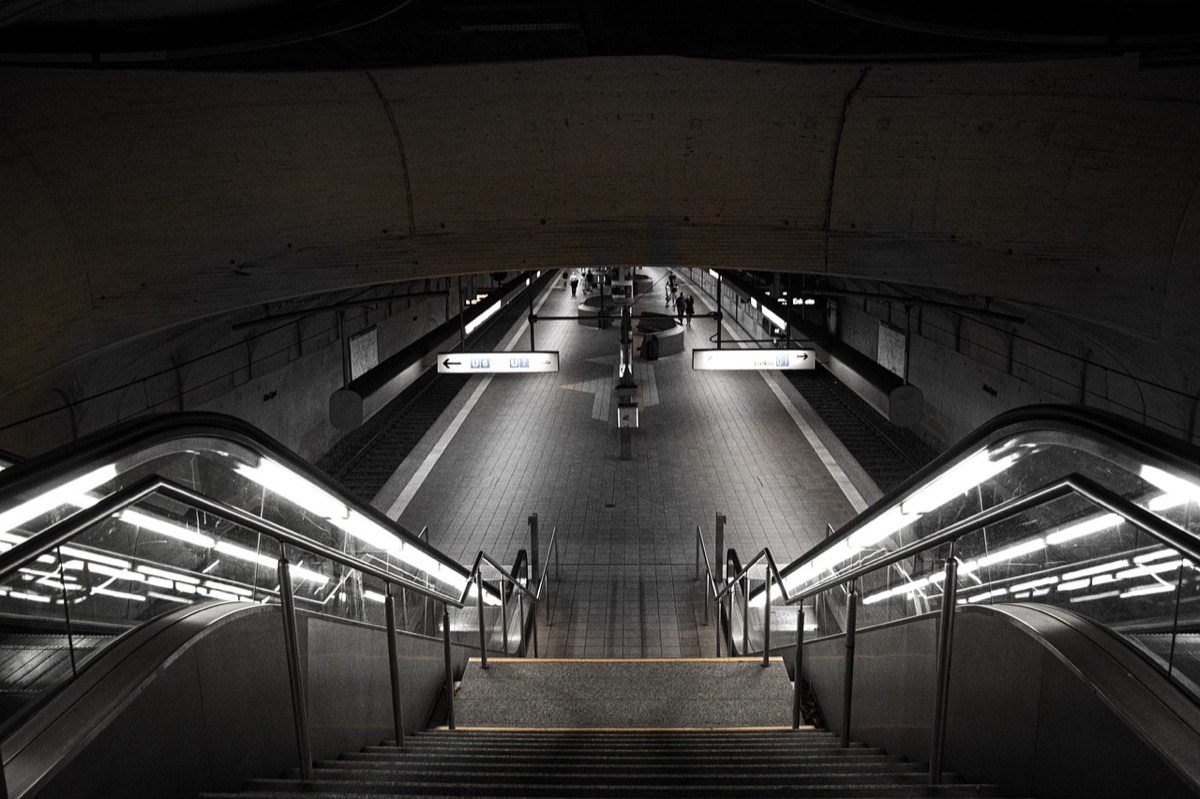
Walking down a dimly lit staircase into a station at 11:00 PM, I felt that slight prickle of nervousness that almost every visitor feels when they first encounter the NYC underground.
Safety is a combination of awareness and common sense. Keep your belongings secure and your eyes up. While the subway is generally safe, always stay aware of your surroundings. If you are traveling late at night, try to stick to trains that have other passengers and avoid empty, isolated cars.
Etiquette is vital for a smooth ride. When a train arrives, let passengers exit the car before you attempt to board. In the crowded cars, move toward the center to make room for others. If you are standing near the doors, be prepared to move when the train reaches a station.
Also, remember that the subway is a melting pot of cultures; you will see everything from business professionals to street musicians. Respecting personal space and keeping noise levels reasonable is the best way to navigate this social microcosm.
Before you head down into the station, always check the MTA service alerts. Delays can happen due to construction, signal issues, or medical emergencies. Knowing about a planned weekend closure before you leave your hotel can save you a massive headache.
How do I master a successful trip?
I remember standing at a transfer station in 2025, looking at three different colored lines and realizing I had no idea which platform was which. It took me ten minutes of circling to find the right stairs.
To avoid that confusion, follow this checklist whenever you plan a journey through the city:
- Check the Direction: Confirm if you need Uptown or Downtown before you descend the stairs.
- Verify the Service Type: Check the platform signs to see if the arriving train is an Express or a Local.
- Check Real-Time Status: Open your transit app to see if there are active service delays or weekend construction.
- Prepare Your Payment: Ensure your phone is charged or your tap-to-pay method is ready to go.
- Identify Your Transfer Points: Know which major hubs (like Union Square or Canal Street) allow you to switch lines easily.
It is important to note that while the subway is incredibly efficient, it is not always the best choice during extreme weather events or during major planned maintenance windows. In those cases, walking or using a rideshare service might be a better alternative.
Quick Fixes & Troubleshooting
Q: Do I need a ticket if I'm just passing through? A: In the NYC subway, you pay to enter the system through the turnstile. Once you are through, you can transfer between lines within the same system without paying an additional fare, provided you stay within the station boundaries.
Q: How do I know if my train is Express or Local? A: Check the signage on the platform and the digital countdown clocks. The signs will specify which service (e.g., "Local" or "Express") stops at that specific station.
If you are on a train and realize it is an express, look at the next station name to see if it is a scheduled stop.
Q: What if I accidentally ride in the wrong direction? A: Do not worry. Simply exit at the next station, follow the signs for the opposite direction (e.g., if you were going Downtown, look for Uptown), and tap your phone/card at the turnstile to head back.
In most cases, you will not be charged an extra fare for a single mistake.




Comments 0