Ivy League Choice: NYC Immersion vs. Campus Sanctuary
"The ivy-covered walls of an elite university tell a story of prestige, but the setting determines the rhythm of the student life within them."
If you are planning a trip to New York in 2026 with an eye toward higher education, you will likely find yourself weighing two very different worlds: the bustling, urban energy of Morningside Heights and the sprawling, scenic landscapes of Ithaca.
While both are Ivy League titans, they offer vastly different experiences for prospective students and curious visitors alike.
Key Takeaways * Setting Matters: Columbia offers seamless integration into the heartbeat of Manhattan, while Cornell provides a traditional, self-contained campus experience.
* Academic Breadth: Cornell’s multi-college structure offers a massive variety of specialized undergraduate paths, whereas Columbia focuses on a core liberal arts curriculum within an urban setting.
* Visitor Strategy: Choose Columbia for an immersion in global city life and Cornell for a deep dive into a concentrated, residential academic community.

Why Compare Columbia and Cornell? Setting the Stage for Elite Education
Standing at the corner of 116th Street and Broadway in late 2025, you can hear the rumble of the subway beneath your feet and the chatter of a thousand different languages from the surrounding streets.
This is the reality of Columbia University—a place where the city is not just a backdrop, but a constant participant in the academic life of its students.
In contrast, traveling several hours north to Ithaca in the summer of 2026 places you in a setting where the architecture and the natural beauty of the Finger Lakes region define the horizon.
Comparing these two is not about determining which is "better," but about understanding which environment fosters the specific type of growth a student seeks.
One represents the ultimate urban immersion, where the classroom often extends to the museums of Upper Manhattan and the professional hubs of Midtown.
The other represents the classic collegiate ideal, where the campus is a sanctuary of learning, designed to foster a tight-knit community through shared residential life.
If you are visiting to scout a future home, you must decide if you want to live within a global metropolis or within a dedicated academic ecosystem. But choosing a setting is only the beginning; you also have to consider the internal structure of the schools themselves.
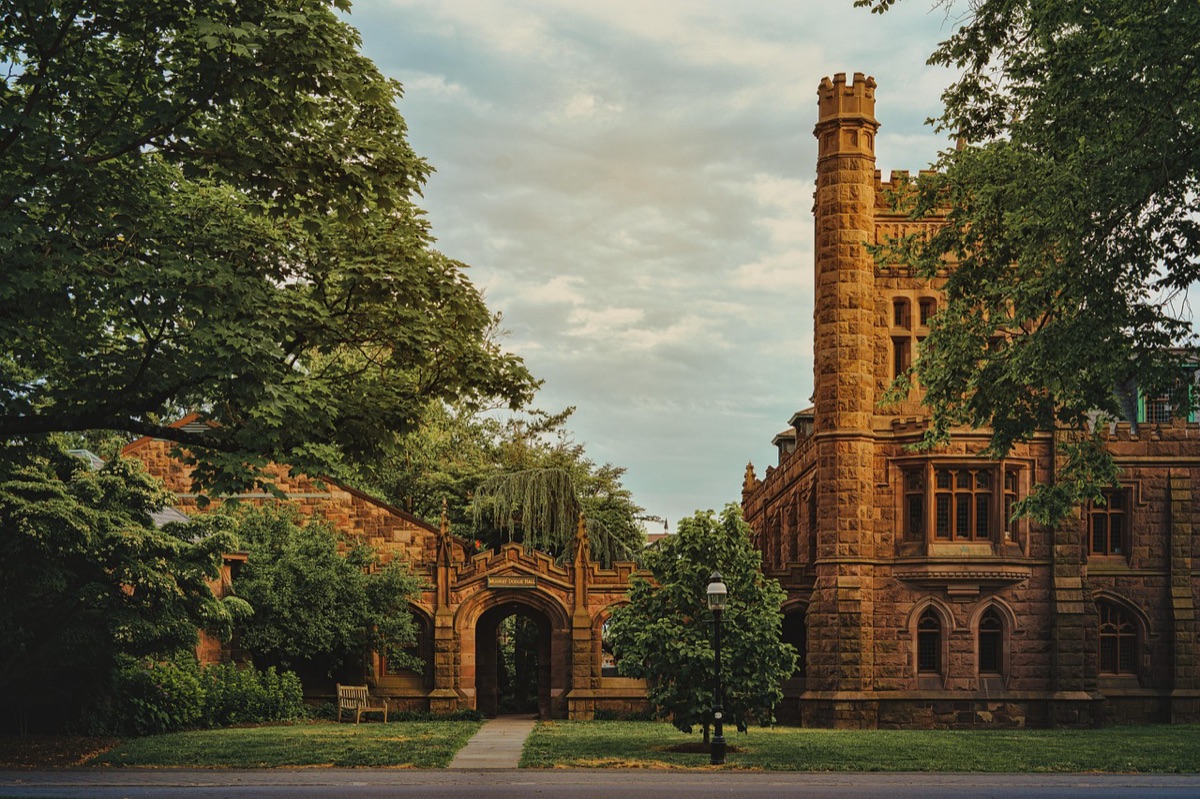
What defines each campus's academic profile? Walking through Low Memorial Library at Columbia, the sunlight streams through massive windows, illuminating a student body that feels as diverse as the city itself. The atmosphere is one of intense, focused energy, where the boundaries between the university and the world are intentionally blurred.
Columbia is a racially diverse school, with approximately 52% of all students identifying themselves as persons of color. This diversity is a cornerstone of the student experience, reflecting the global nature of the city it calls home.
The curriculum is designed to be rigorous and centralized, often leaning heavily on a core of liberal arts that ensures every student has a broad intellectual foundation regardless of their specific major.
At Cornell, the scale is entirely different. The university is composed of several distinct undergraduate colleges, each with its its own unique mission and culture—ranging from the College of Agriculture and Life Sciences to the College of Architecture, Art, and Design.
This structure allows for a massive incoming class profile and a wide variety of specialized niches.
While Columbia students navigate the city to find their niche, Cornell students often find their identity within the specific traditions of their chosen college.
The sheer size of the undergraduate population at Cornell creates a different kind of social dynamic, one built on the shared experience of a large, multifaceted institution. But how do these academic structures translate into real-world influence?
What lies beyond the classroom in research? The quiet hum of a research lab in a high-rise building captures the essence of modern institutional impact. In these spaces, the work often intersects with industry, government, and global policy, turning academic inquiry into immediate real-world application.
According to the Israel Institute of Technology, Cornell and Technion won a competition in 2011 for rights to claim free city land and $100 million in subsidies to build an engineering campus in New York City.
The Atkinson Center was established following a multiyear discussion about energy and sustainability, funded by an $80 million gift from alumnus David R.
Large-scale institutional achievements often drive the prestige of these schools. For example, Cornell’s commitment to large-scale research is evidenced by the establishment of the Atkinson Center for Sustainability, which was funded by an $80 million gift from alumnus David R.
following a multiyear, cross-campus discussion about energy and sustainability. This reflects a massive institutional footprint that extends far beyond undergraduate teaching.
The scope of research also includes collaborative ventures that reshape urban landscapes.
On December 19, 2011, Cornell and Technion – Israel Institute of Technology in Haifa won a competition for rights to claim free city land and $100 million in subsidies to build an engineering campus in New York City.
This demonstrates how even a school with a strong upstate presence can exert significant influence on the city's technological and educational infrastructure.
However, the physical experience of being there is where the choice truly hits home.
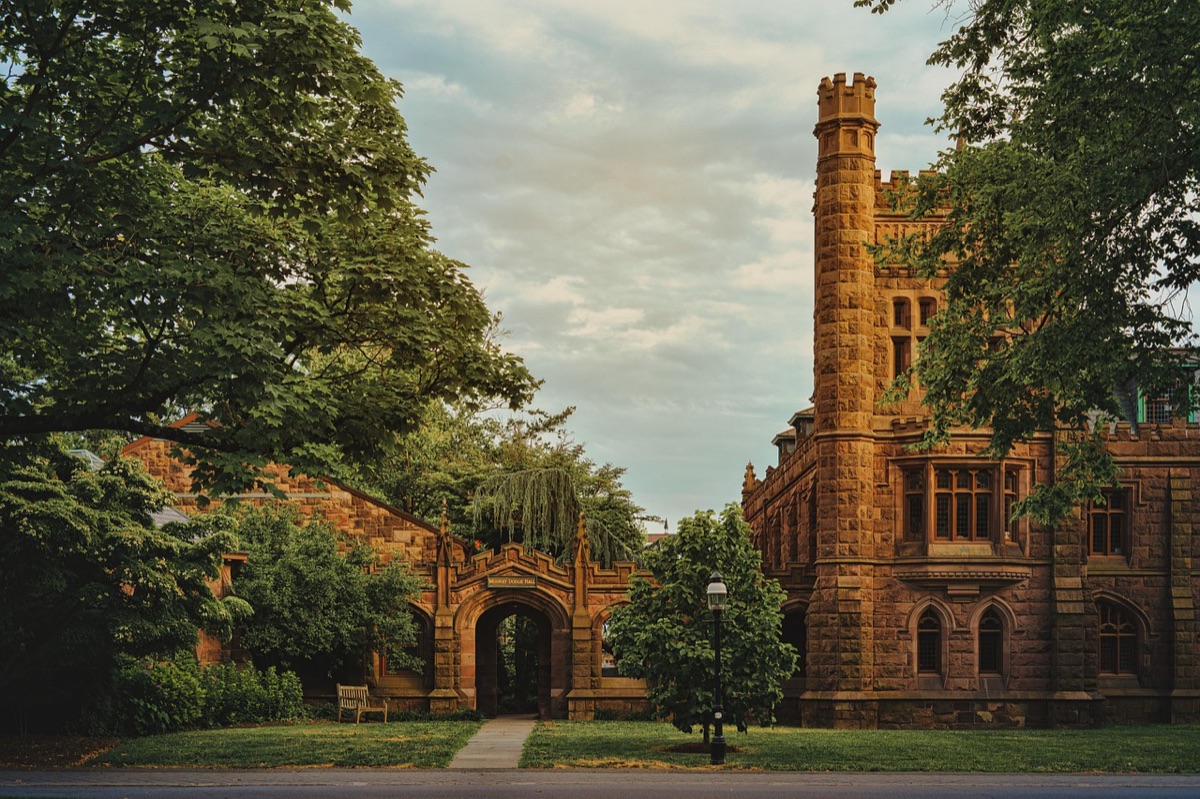
The Visitor Experience: Tailing Your Visit
Checking into a hotel in Midtown Manhattan feels worlds away from arriving at a lakeside lodge in Ithaca. As you step off the train or out of a car, the sensory transition is immediate: the smell of street food and exhaust versus the scent of pine and fresh lake air.
As noted by the Guides Association of NYC, the professional trade organization represents just 10.9% of all licensed tour guides in the city. According to the World Bank, the United States recorded international tourist arrivals of 45,037,000 in 2020.
For a visitor, the experience of Columbia is one of accessibility. You can walk from a lecture hall to a world-class museum or a local deli in minutes. It is an "immersion" visit, where you are constantly reminded of the social and economic complexities of the city.
It is perfect for those who want to see how academia lives within a dense, functioning society.
A visit to Cornell is often a "residency" experience. Because the campus is more isolated, you are essentially entering a self-contained world. To truly understand the vibe, you must spend time walking the gorges or sitting in the student unions.
It is a deep dive into a setting designed to foster intense focus and community bonding.
If your goal is to see how a student lives in a global hub, stay in Manhattan. If you want to see how a student lives in a dedicated intellectual community, head to Ithaca. But once you arrive, how do you actually navigate the transition from visitor to prospective student?
Navigating the Application Process (For Future Applicants)
Sitting in a quiet coffee shop in 2026 with a laptop open, a prospective student might look at a spreadsheet of acceptance rates and standardized test scores. The numbers can be daunting, but they are merely snapshots of a much more complex reality.
The application process for both schools is highly competitive, often involving thousands of applicants for a limited number of spots. While specific benchmarks like SAT or ACT scores vary by year, the general trend is toward holistic review—looking at the person behind the numbers.
When you are preparing your own journey, follow these steps to evaluate your fit:
- Assess the Environment: Do you thrive in high-density urban settings or quiet, natural landscapes?
- Analyze the Curriculum: Do you prefer a centralized core (Columbia) or a specialized, multi-college structure (Cornell)?
- Evaluate Social Dynamics: Do you want an integrated city life or a self-contained residential community?
- Review Resource Access: Consider how local industry and research hubs align with your specific major.
- much more than just checking boxes, you must determine if the culture aligns with your personal growth goals.
| Feature | Columbia University | Cornell University |
|---|---|---|
| Primary Setting | Urban (Manhattan, NYC) | Rural/Campus (Ithaca, NY) |
| Campus Vibe | Integrated, fast-paced, global | Self-contained, scenic, traditional |
| Structure | Centralized Liberal Arts focus | Multi-college, specialized structure |
| Student Diversity | High (approx. 52% POC) | Diverse, with various college identities |
| Best For... | Urban immersion & professional access | Deep focus & diverse undergraduate niches |
When I personally visited both campuses in the spring of 2025, I noticed that the energy in Manhattan felt like a constant current, while the energy in Ithaca felt like a focused beam. It is a distinction that no brochure can fully capture.
It is important to note that these comparisons are broad. A student studying engineering at Cornell will have a vastly different daily routine than a student studying philosophy at Columbia, even if the "vibe" of the campus is the primary differentiator.
#







Comments 0