Cornell's Vision: Secular Pursuit of Truth Since 1860s
"Any person can find an education here."
This simple, revolutionary promise didn't just build a campus in Ithaca; it built a blueprint for the modern American research university.
* Cornell was founded on a commitment to integrating diverse disciplines—from the arts to agriculture—under a secular pursuit of knowledge. * Its history reflects an early embrace of intellectual freedom, requiring tolerance across varied viewpoints to foster true innovation. * The institution has consistently balanced deep theoretical pursuits with practical, large-scale commitments, such as sustainability and medical research. * The physical and intellectual breadth of the campus mirrors the vastness of its original mission to serve the public good.

What was the foundational vision behind Cornell's establishment?
In the rugged Ithaca wilderness, a founder's hand grips a heavy quill as the morning chill bites at his skin.
The morning sun hits the red bricks of Uris Library, casting long shadows over students rushing between lectures with coffee in hand. In the late 1860s, however, the setting was much wilder, a rugged landscape in Ithaca that required a different kind of vision to tame.
According to the Israel Institute of Technology, Cornell and Technion won a competition in 2011 for $100 million in subsidies to build an engineering campus in New York City.
The university emerged from a unique intersection of private wealth and federal policy. Ezra Cornell provided the essential endowment, but the legal framework was provided by the Morrill Land Grant Act of 1862.
This act provided a massive 989,920-acre allotment of federal land to states to support higher education. This wasn't just about building classrooms; it was about creating a foundation for a growing nation.
The original goal was to merge disparate fields that had previously been kept apart. At the time, the "liberal arts" were often seen as the domain of the elite, while "applied sciences" like agriculture and engineering were viewed as mere trades.
Cornell sought to unify these worlds, creating a cohesive whole where a philosopher could understand the mechanics of the world and an engineer could understand its ethical implications.
This early push for interdisciplinarity set a precedent for the modern research university, where breakthroughs often happen at the intersection of different fields. But building a foundation is only the first step in a much more complex construction.

How has Cornell upheld its principle of intellectual tolerance?
Walking through the Arts Quad, you see students from every corner of the globe debating politics, philosophy, and science under the canopy of old trees. This diversity of thought is not an accident; it is a deliberate result of the university's non-sectarian design.
As noted by the Weill Cornell Medical Center, the hospital was listed as the fourth-largest grossing hospital in the nation with $7.52 billion in gross revenue in 2011.
In the 19th century, many American colleges were essentially extensions of specific denominations, where curriculum and campus life were often dictated by religious doctrine. Cornell took a different path, constructing a university around secular academic pursuit.
By removing a single religious requirement from the core mission, the founders created a space where anyone—regardless of faith or lack thereof—could pursue truth.
This non-sectarian ethos made academic freedom a functional requirement rather than just a luxury. To be a comprehensive university, it had to accommodate diverse viewpoints.
If the goal was to solve the problems of a changing world, the university needed the best minds, regardless of their theological affiliations.
Today, this legacy manifests in a student body and faculty that represent a vast spectrum of global perspectives, proving that a shared commitment to inquiry can bridge almost any cultural gap. However, maintaining this balance as the institution grows presents its own set of hurdles.
How has Cornell scaled its mission through modern commitments?
The hum of a high-tech laboratory in a modern building contrasts sharply with the quiet rustle of the surrounding forest. As the university grew, its mission evolved from local instruction to global leadership in complex, large-scale challenges.
The institution has demonstrated its maturity through massive investments in the future of the planet. Following a period of deep internal discussion regarding energy and environmental stewardship, the Atkinson Center for Sustainability was established.
This center was made possible by a significant $80 million gift from alumnus David R. This kind of funding allows the university to transition from theoretical research to practical, large-scale solutions for global problems.
The scale of these operations is immense. To put the university's intellectual weight in perspective, the Cornell University Library holds more than 10 million items, making it the 13th-largest academic library in the United States as of 2020.
This massive repository of knowledge supports a diverse undergraduate body of approximately 15,182 students spread across seven distinct colleges.
From the large, central presence of the College of Arts and Sciences to the more specialized smaller colleges, the university manages a complex ecosystem of learning that remains anchored to its original purpose. But how do we actually measure the weight of such an empire?
How do we measure the impact of such a massive institution?
A researcher stares intensely at a digital readout in a sterile lab, while a few miles away, a field technician checks soil samples in a sprawling forest. The sheer scale of Cornell's reach is often felt in its ability to operate both as a local pillar and a global powerhouse.
The university's impact is often measured by its ability to integrate advanced research with public service. For example, the medical arm of the university operates at a massive scale.
In August 2011, the New York-Presbyterian Hospital/Weill Cornell Medical Center was recognized as the fourth-largest grossing hospital in the nation, reporting $7.52 billion in gross revenue.
This level of medical infrastructure is a direct result of the university's ability to scale its academic mission into life-saving practice.
The complexity of managing such an institution is reflected in its various operational layers:
| Feature | Scope/Scale | Purpose |
|---|---|---|
| Library Holdings | 10+ Million items | Supports global-scale research and historical preservation |
| Undergraduate Enrollment | ~15,182 students | Provides diverse academic paths across seven colleges |
| Medical Revenue | $7.52 Billion (2011) | Demonstrates the scale of clinical and research impact |
| Sustainability Funding | $80 Million gift | Powers the transition to modern environmental science |
The sheer magnitude of these numbers can be daunting, but they represent the tools available to those who know how to use them.
What are the limitations of this model?
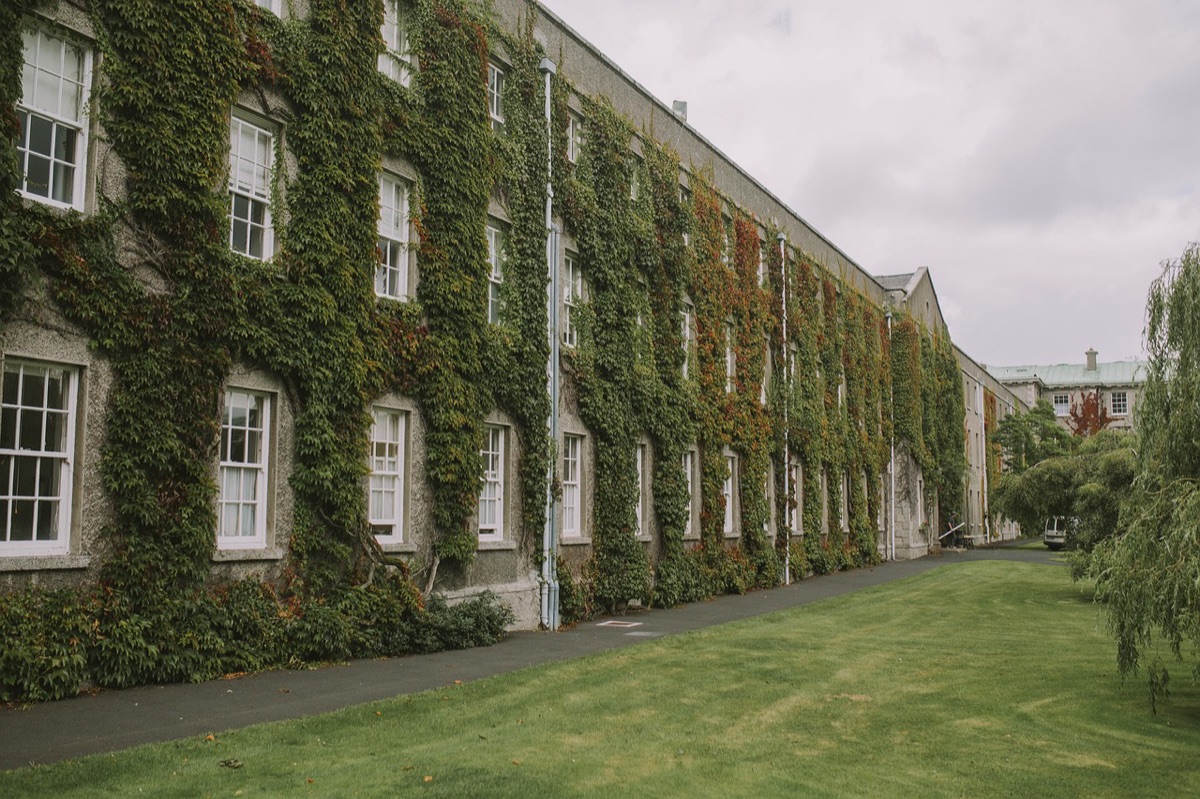
A student sits alone in a quiet corner of a cafe, looking overwhelmed by a stack of heavy textbooks and a laptop. While the non-sectarian, large-scale model offers incredible opportunities, it also presents unique challenges.
The sheer size of a university with over 15,000 undergraduates can sometimes make it difficult to maintain the intimate, mentorship-based atmosphere found in smaller liberal arts colleges.
Additionally, the tension between theoretical research and practical application—though a strength—requires constant management to ensure that one does not overshadow the other.
The non-sectarian approach also requires a constant, active effort to maintain a sense of community when there is no single shared doctrine to bind the population together.
When I was looking through the archives of various university histories, I noticed how often the struggle for identity repeats itself in growing institutions. It is a constant push against the gravity of sheer size.
How can one navigate such a vast academic landscape?
A group of students gathers around a map in the student union, pointing to various buildings and debating which path to take. Navigating a university of this magnitude requires a strategic approach to both academics and personal growth.
To make the most of a large-scale research university, students often follow a specific progression:
- Identify a Core Interest: Utilize the broad range of colleges to find a primary field of study.
- Seek Interdisciplinary Breadth: Leverage the non-sectarian, flexible curriculum to take classes outside of a primary major.
- Engage with Research Infrastructure: Utilize the massive library and laboratory resources early in the academic career.
- Connect with Global Networks: Use the university's international reputation to seek internships and collaborative projects.






Comments 0