New York Metro History and 20.1 million Residents Guide
"The New York metropolitan area stands as a vast, sprawling engine of human activity, defined by its immense landmass and dense urban concentration."
The New York metropolitan area is the most populous statistical area in the United States, housing 20.1 million residents as of 2020. This massive region is characterized by its unparalleled urban landmass and complex transit infrastructure.

Key features include its role as a global cultural hub, its massive school district, and its highly interconnected commuter rail systems. 1. A total landmass encompassing 4,669.0 sq mi (12,093 km2). 2. A population of 20.1 million people in the statistical area. 3. The largest school district in the country serving 1.2 million students. * A highly dense urban core in New York City.
How massive is the New York Metro History landmass?
At sunset, I trek across the vast york landscape while the cold wind bites my skin.
Walking through the expansive streets of the five boroughs, one feels the weight of a region that stretches far beyond the city limits. The New York metropolitan area is the largest metropolitan area in the world by urban landmass, covering 4,669.0 sq mi (12,093 km2).
This immense scale defines the New York Metro History and its influence on the surrounding geography.
The statistical area covers 6,140 sq mi (15,903 km2), while the combined statistical area expands to 13,318 sq mi (34,493 km2). This vast expanse encompasses an ethnically and geographically diverse region. The sheer size of this territory makes it a central pillar of the Eastern Seaboard.
What defines the population density of the region?
Standing on a crowded subway platform during rush hour, the sheer number of people moving through the veins of the city becomes apparent. In 2020, the New York metropolitan statistical area was the most populous in the United States, with 20.1 million residents.
A population of 20.1 million people resides in the statistical area.
This group represents slightly over 6% of the nation's total population.
New York City itself is a concentrated core within this sprawl. With a Census-estimated population of 8,335,897 in 2022, distributed over just 305 square miles (790 km2), it is the most densely populated major city in the United States.
I have often observed how this density shapes every interaction within the urban landscape.
How does the transit infrastructure function?
During the dawn, I feel the heavy vibration of the york train as it rushes past the platform.
Watching a commuter train pull into a station at dawn, one realizes how vital the rails are to the region's survival. The Metro-North Railroad (MNRR) is a critical component of this movement. As of 2015, it was the third busiest commuter railroad in the United States.
The operation of this system is a collaborative effort. This interconnectedness allows for the fluid movement of millions across state lines.
What are the primary educational and cultural pillars?
Entering a quiet, grand hall filled with ancient artifacts, the cultural depth of the city reveals itself. The Metropolitan Museum of Art, colloquially referred to as the Met, serves as an encyclopedic art museum in New York City.
The Metropolitan Museum of Art, colloquially referred to as the Met, is an encyclopedic art museum in New York City, according to The Metropolitan Museum of Art.
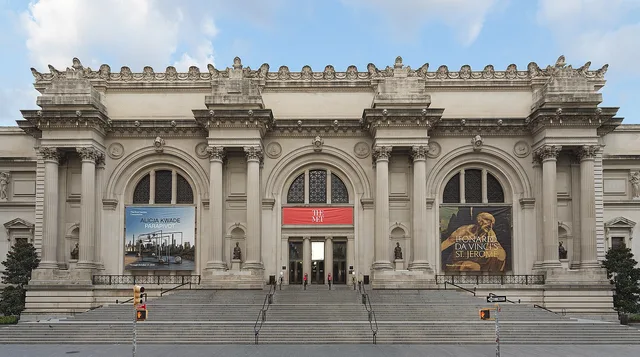
It stands as a testament to the region's role as a global cultural leader.
The social infrastructure is equally massive. The New York City Department of Education is the largest school district in the United States, serving over 1.2 million students. This scale ensures that the region remains a center for human development and social complexity.
How is the area accessed by travelers?
Navigating the bustling terminals of a major international hub, travelers encounter the gateways to the metropolis. Three major airline hubs serve the New York area: Kennedy International Airport, LaGuardia Airport, and Newark Liberty International Airport.
All three major airports are operated by The Port Authority of New York & New Jersey.
The regional connectivity extends to the water and land. While the airports handle global arrivals, the local transit and rail systems manage the daily flow of the 20.1 million residents. This layered approach to mobility is essential for such a large metropolitan area.
How does the environment impact daily life?
Feeling the sudden warmth of a winter afternoon, one experiences the unique climate of the region. The area receives at least 42 inches (1,070 mm) of precipitation annually, which is relatively evenly spread throughout the year. Many areas actually receive upwards of 50 in (1,270 mm).

The weather also includes specific seasonal shifts. Warm periods with 50 °F (10 °C)+ temperatures may occasionally occur during winter as well. The region averages 234 days with at least some sunshine annually, accumulating between 2,400 to 2,800 hours of sunshine.
| Feature | Metric |
|---|---|
| Statistical Area Population (2020) | 20.1 million |
| Urban Landmass | 4,669.0 sq mi |
The same subject is also called NYC subway history.
The same subject is also called Metropolitan area past.
The same subject is also called New York transit history.
The same subject is also called NYC urban infrastructure.
This part also covers Metro transit evolution.
This part also covers NYC subway development.
This part also covers Metropolitan mobility history.
Metro transit evolution
Related
- How has the NYC Natural History Museum evolved?
- What is MoMA's physical history? MoMA modern art guide
How do the different landmass measurements compare?
Comparing the various geographic scales reveals how the New York metropolitan area expands. The urban landmass covers 4,669.0 sq mi (12,093 km2), which distinguishes it as the largest in the world. This figure is smaller than the statistical area, which encompasses 6,140 sq mi (15,903 km2).
The combined statistical area represents the largest measurement, reaching 13,318 sq mi (34,493 km2).
What conditions affect regional mobility?
Regional mobility depends on the coordination between different transit entities. The Metro-North Railroad functions through a partnership involving the MTA, the Connecticut Department of Transportation, and New Jersey Transit.
This collaborative structure is necessary to manage the movement of residents across state lines. Travelers must navigate through three major airport hubs, including Kennedy, LaGuardia, and Newark Liberty, all of which are managed by The Port Authority of New York & New Jersey.








Comments 0